Africa · Guided Expedition
Kilimanjaro
Packing List
By TrailIQ — climbed via the 7-day Machame route · Updated June 2026
Affiliate Disclosure: TrailIQ is a participant in the Amazon Services LLC Associates Program. As an Amazon Associate I earn from qualifying purchases. This comes at no extra cost to you.
Two Bags. Two Jobs.
Porter duffel
Under 15 kg
Carried by porters between camps. Pack everything you won't need on the trail. Keep it soft-sided so porters can stack loads.
Your daypack
~30 L · 5–7 kg
You carry this every day. Water, layers, snacks, camera, headlamp, first aid. On summit night it holds everything — thermos, poles, emergency layer.
Temperatures
| Where | Day | Night |
|---|---|---|
| ~4,000 m | ~15 °C | ~−10 °C |
| Summit (5,895 m) | ~5 °C | ~−20 °C |
From my climb
"I crawled out of the tent at Barafu Camp around midnight into fresh snow. The temperature had dropped to −18 °C. We were at 4,600 m with 1,300 m of altitude still to gain. The wind on the Crater Rim would later hit 60 km/h. Without the down jacket and insulated gloves, the summit would not have been possible."
The Machame route earns its "Whiskey Route" nickname — longer than Marangu but with better acclimatisation and far more dramatic scenery. The key is pole pole (Swahili for "slowly, slowly"). Rushing is the single biggest reason climbers turn back.
Gear List
Product links go straight to the retailer — no discount codes, no markup. If you buy through one, TrailIQ may earn a small commission at no cost to you.
🧳Bags & Sleep
🧥Layers
- Patagonia Torrentshell 3L Jacket (Men's)Buy at:REIPatagoniaAmazon
- HIMALI Peak 7 Down Jacket
- Black Diamond Guide GlovesBuy at:Black DiamondREIAmazon
- Oakley Clifden
🥾Feet
- Merrell Moab 3 Hiking Shoes (Men's)Buy at:REIAmazon
- The North Face ThermoBall Traction Mules V
- Darn Tough hiker socks
🔦Trail & Safety
- Petzl Aria 2
- Survivor Filter Cleanable Water Filter Straw (L600)Buy at:Survivor FilterAmazon
- Exped Drybag First Aid 1
What the climb is actually like
Pole pole — the pace of the mountain. Your guide will say it a hundred times. The instinct is to hike at normal trail speed; the reality is that at altitude, that pace is unsustainable. Slow down until it feels almost embarrassingly slow. That is the correct pace.
The Machame route begins in dense equatorial rainforest that quickly gives way to moorland and then alpine desert. On Day 3, the famous Shira Plateau acclimatisation hike climbs to 4,000 m before descending back to 3,900 m to sleep — "climb high, sleep low" in practice.
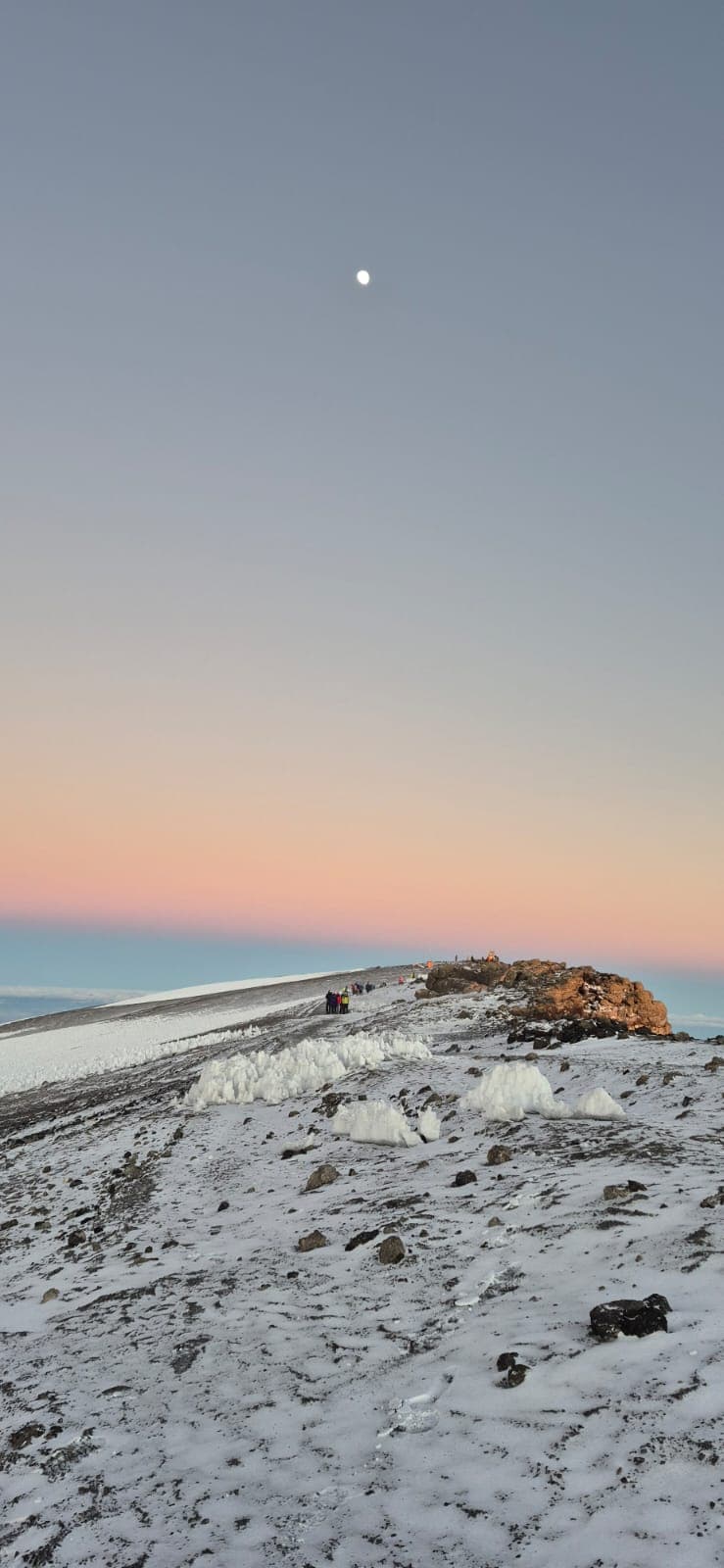
Barafu Camp, your summit launch pad at 4,600 m, is a bleak scree plateau. You sleep from 7 pm to 11 pm, then rise to start the summit push at midnight. The cold is savage. Fresh snow on the Crater Rim is common even in dry season. The headlamp you carry matters — 400 lm minimum, fully charged, spare batteries in your pocket.
The crew changes everything. On Kilimanjaro, your team of guides and porters is as important as your gear. They carry the weight, cook the food, set up camp, and read the mountain. Tip generously — there are official guides on minimum tip amounts — and treat the crew with the same respect you give your summit partner.
One honest toilet tip: the long drops on the Machame route are functional but grim. Pack biodegradable wet wipes. And on summit night, accept that you will need to stop on the crater rim. Dress warmly enough that two minutes outside doesn't cost you core temperature.
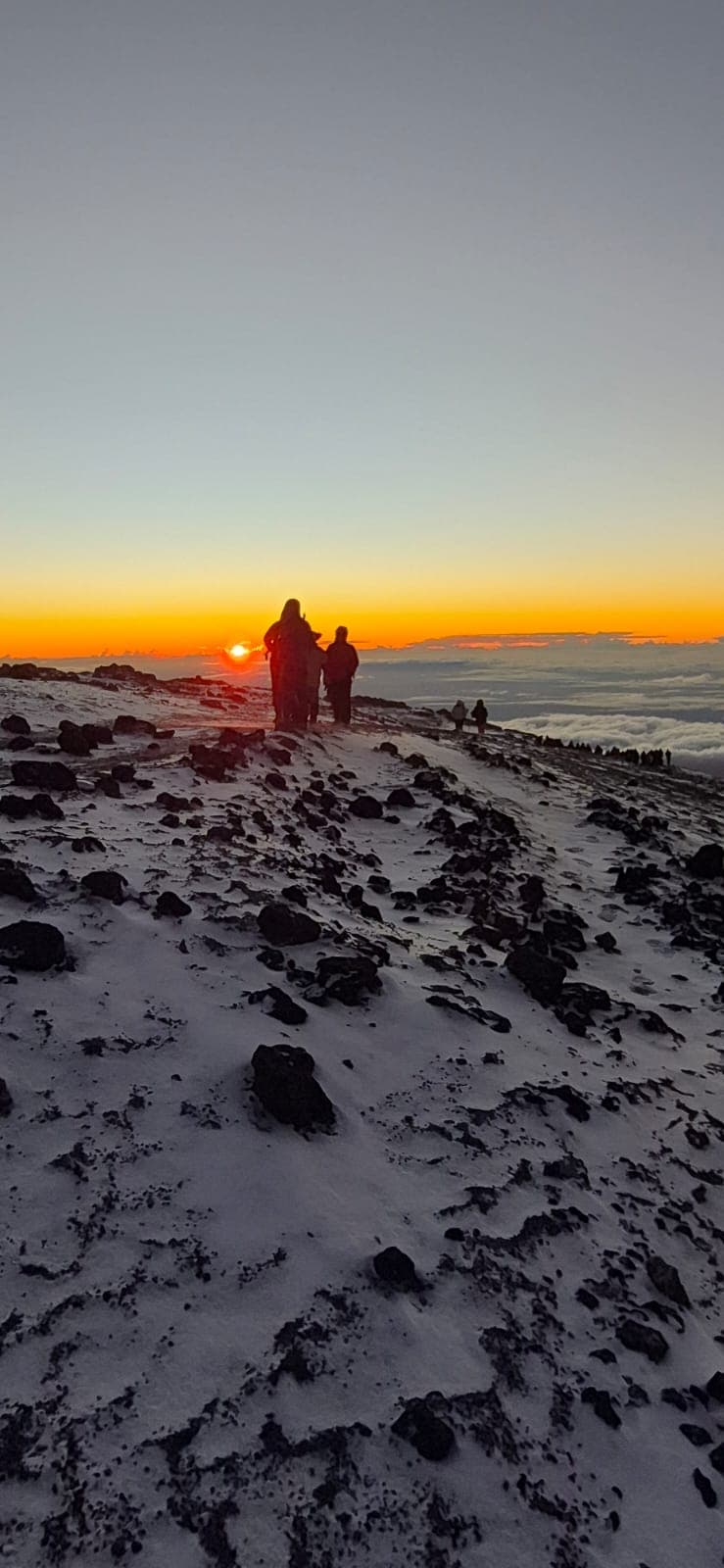
Summit at sunrise — the moment the clouds drop away below you.
Climbing Kili soon?
Tell TrailIQ your route → get a personalised kit with weight totals, porter-safe packing tips, and a printable checklist.
Get my personalised kit →FAQ
How heavy can my duffel be?
The ethical porter limit on Kilimanjaro is 15 kg per climber. Your duffel plus anything the porter carries for you should stay under that total. Pack ruthlessly — porters walk the same altitude gain you do, often in plastic shoes.
What temperature sleeping bag do I need?
You need a bag rated to at least −5 °C comfort, ideally −10 °C. At Barafu Camp (4,600 m — your summit launch pad), tent temperatures regularly drop below −10 °C overnight. The Western Mountaineering MegaLite or an equivalent is the recommended minimum.
Do porters carry my daypack?
No. Your daypack is yours to carry every day. This is why the ~30 L size matters — large enough for water, layers, snacks, camera, headlamp, and first aid, yet small enough that 6–7 kg stays manageable over 6–8 hours of hiking at altitude.
Quick Comparison
| Item | Weight | Retailer | Note |
|---|---|---|---|
| Decathlon Simond Duffel 500 Extend (40–60L) | 1.27 kg (2.8 lb) | Decathlon | porter bag — extendable 40–60L |
| Gregory Citro 24 H2O | 907 g (2.0 lb) | Gregory | ~24L daypack, hydration-ready |
| The North Face Green Kazoo Sleeping Bag | 1355 g (reg) | The North Face | 0°F / -18°C, 700-fill down |
| Patagonia Torrentshell 3L Jacket (Men's)Buy at:REIPatagoniaAmazon | 400 g (14.1 oz) | REI | essential — refresh DWR |
| Petzl Aria 2 | 106 g | REI | 450 lm, IP67 waterproof · ⚠ add REI price |
Weights are manufacturer-stated.